About
CONTEXT, HISTORY, AND OBJECTIVES
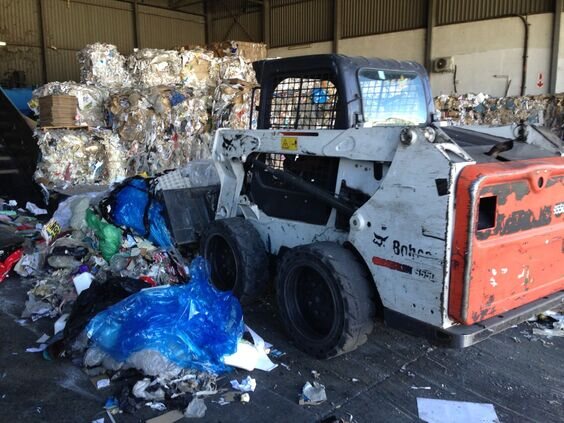
According to the last official published statistics for South Africa, 90% of all waste was disposed to land (landfills and dumpsites) in 2011. According to the CSIR, an estimated 7.2% of urban and 6.2% of rural households regularly separate their waste for recycling. Furthermore, South Africans still landfilled R17 billion worth of resources, as waste, every year (as at 2011). These statistics underline the challenges that South Africa is facing in respect to waste. The mismanagement of waste has a direct negative impact on the environment and on the health of communities. However, the paradigm shift from “waste” to “resource” brings opportunities for improved livelihoods and the reduction in poverty. In light of the these figures, challenges and opportunities, reconceptualising the way we deal with waste as a society not only builds a cleaner and more environmentally sustainable South Africa, but has the potential to unlock job opportunities, improve livelihoods and reduce unemployment. The South African waste sector is in desperate need of change.
OUR FOCUS
The Chair focuses on research to create and foster appreciation for the value of waste in service of the wellbeing of people and the environment. This core purpose of the Chair is supported by four research aims.
1
In the first place, the team concentrates on understanding perceptions and behaviour relating to waste. Insights gained from research concentrating on this aim, have the potential to bolster behavioural change and waste diversion strategies. Integrating informal waste pickers in relevant solutions is also an important consideration. Evidence based research focuses on communication and awareness strategies to changing South Africa’s behaviour.
2
In the second place, the Chair explores job creation opportunities along the waste value chain. International studies have indicated that for one job in landfilling, four jobs could be created in composting, ten in material recovery facilities, 25 in recycling and 296 in computer reuse. The identification of direct, indirect and induced job opportunities in different waste value streams and waste value chains, in South Africa, is therefore of significant value.
3
In the third place, business models are investigated and developed, with a focus on small businesses in the waste sector. Many SME opportunities exist in waste diversion. The realisation of these opportunities contributes to the national target set in the second National Waste Management Strategy, to create 69 000 jobs and 2600 SMMEs. In the third place, business models are investigated and developed, with a focus on small businesses in the waste sector. Many SME opportunities exist in waste diversion. The realisation of these opportunities contributes to the national target set in the second National Waste Management Strategy, to create 69 000 jobs and 2600 SMMEs.
4
Lastly, the Chair supports and capacitates emerging researchers. The number of established and emerging researchers and postgraduate students in the field of waste and society has grown since the establishment of the Chair in 2018. By involving students and researchers in research projects, developing research partnerships, and hosting conferences, workshops and seminars, the Chair contributes to establishing a corpus of skilled researchers in the waste field. Lastly, the Chair supports and capacitates emerging researchers. The number of established and emerging researchers and postgraduate students in the field of waste and society has grown since the establishment of the Chair in 2018. By involving students and researchers in research projects, developing research partnerships, and hosting conferences, workshops and seminars, the Chair contributes to establishing a corpus of skilled researchers in the waste field.
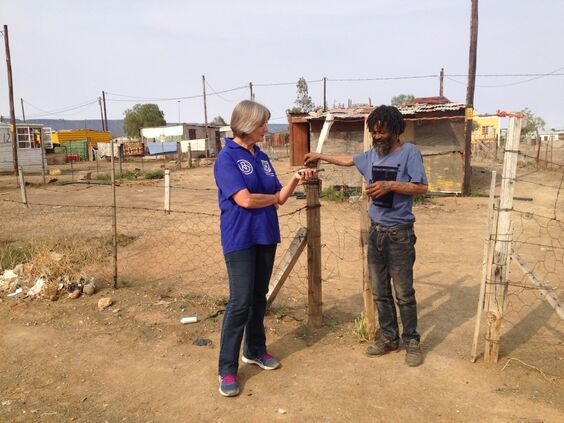
The DSTI/NRF/CSIR SARChI Chair in Waste and Society is headed by the former HOD of the Department of Social Work at UWC, Professor Rinie Schenck. She has more than 50 years of experience in social sciences. Her fields of specialisation include poverty and unemployment, informal employment, waste recycling, day labour studies and community development
Community of Practice: 2020 - 2024
From 2020 to 2024, the Chair formed part of the National Research Foundation’s Communities of Practice (CoP) Initiative, a collaborative research network focused on unlocking the economic, social and environmental value of waste in South Africa. The interdisciplinary initiative brought together researchers in social sciences, law, economics and engineering to produce solution-oriented research and inform policy and practice.
The CoP was hosted by University of Cape Town and led by Professor Jochen Petersen, in collaboration with several SARChI Chairs, including Professor Catherina Schenck (University of the Western Cape), Professor Ann Starke (University of KwaZulu-Natal), Professor Cristina Trois (University of KwaZulu-Natal) and Professor Hanri Mostert (University of Cape Town).